
Introduction: The Dawn of Real-Time Surveillance
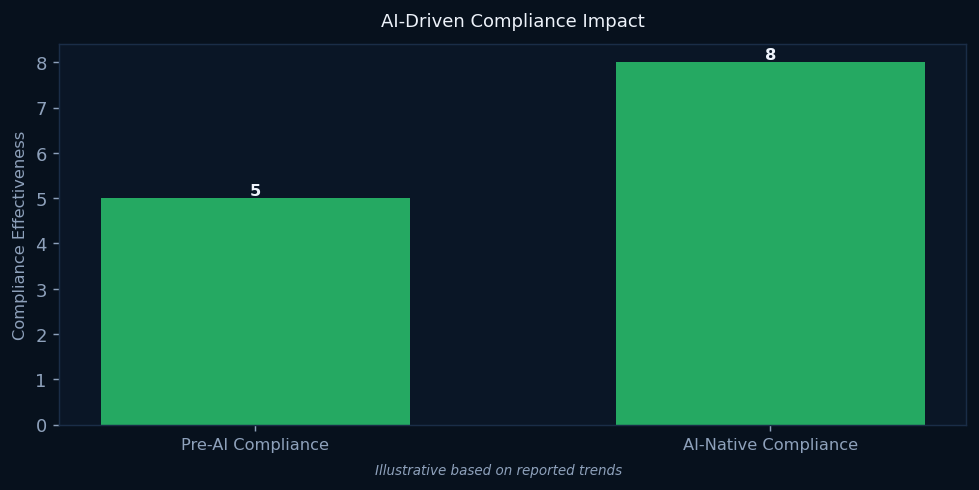
As algorithmic trading becomes increasingly sophisticated and ubiquitous, the need for robust compliance measures has become paramount. The U.S. Securities and Exchange Commission (SEC) is no longer idling at the periphery of technological advancements. Instead, it has moved decisively towards mandating real-time trade surveillance, a step that is forcing algorithmic traders to rethink and rebuild their risk engines with AI-native compliance layers. The implications of this shift are profound, touching on aspects of latency, profitability, and strategic risk management.
In the ever-evolving landscape of financial markets, traders and regulators are in a constant game of catch-up. The recent headline from Medium emphasizes the need for "trade surveillance as a strategic risk control in the age of AI," highlighting the intersection of artificial intelligence and compliance. AI-driven technologies allow for unprecedented real-time analysis and decision-making, but they also bring the potential for AI-washing and deception, concerns echoed by the New York State Bar Association in their discussion on regulating AI deception in financial markets.
Algorithmic Traders Under Pressure: Compliance in Real-Time
The SEC's focus on real-time trade surveillance represents a paradigm shift in regulatory expectations. For algorithmic traders, the mandate is clear: adapt or risk falling foul of stringent compliance demands. This shift underscores the importance of integrating sophisticated AI technologies into traders' risk engines to ensure that all trades are compliant from their inception.
The article from FinTech Global questions, "Is compliance becoming a real-time control system?" This reflects the growing expectation that compliance processes must be as instantaneous and seamless as the trades they oversee. The challenge lies in developing AI-driven compliance tools that do not compromise the efficiency and speed that are the hallmarks of algorithmic trading. RegTech companies, as discussed by Deloitte, are stepping up to provide solutions that merge these requirements, enabling smoother and more effective compliance integration.
The potential for latency, a critical factor in the profitability of algorithmic trading strategies, remains a concern. Traders must balance the computational demands of real-time surveillance systems with the need to execute trades at lightning speeds. The integration of AI-native compliance layers could introduce delays, but forward-thinking firms are investing in faster, more efficient technologies that minimize these impacts.
AI-Native Compliance: The Rise of Explainable AI
As firms adapt to these new compliance mandates, there is a parallel movement towards making AI more explainable. The CFA Institute highlights the necessity for "Explainable AI in Finance," addressing the needs of diverse stakeholders who require transparency and understanding of AI-driven decisions. This is particularly crucial in the realm of compliance, where understanding the rationale behind AI-generated alerts and decisions can differentiate between a compliant trade and a regulatory breach.
Explainable AI helps bridge the gap between raw data analysis and actionable insights, providing traders with a clearer understanding of potential compliance risks. This transparency is invaluable not only for internal decision-making but also for demonstrating compliance to regulators. Firms like Franklin Templeton, which recently invested in Sentient AI, are spearheading efforts to develop systems that are not only powerful but also comprehensible to non-technical stakeholders.
The integration of explainable AI in compliance frameworks represents a departure from the old "black box" AI models, which often left users in the dark about the inner workings of their systems. By embracing transparency, algo traders can better align with regulatory demands and mitigate the risks associated with AI-driven decision-making.
Latency Challenges: Balancing Speed and Regulation
Latency is a fundamental concern for algorithmic traders, where milliseconds can mean the difference between profit and loss. The requirement for real-time trade surveillance introduces an additional layer of complexity, as traders must ensure that compliance checks do not impede execution speed.
To address this, traders are turning to advanced technologies and methodologies that optimize computational efficiency. Techniques such as parallel processing, edge computing, and machine learning optimization are being employed to ensure that compliance checks are performed without introducing significant delays.
The London Stock Exchange Group's use of "AI-powered Surveillance Guide on Amazon Bedrock" serves as a case study in how cutting-edge technology can be harnessed to mitigate latency concerns. By leveraging scalable cloud infrastructure and AI, institutions can perform complex compliance checks in real time, minimizing the impact on trading performance.
Profitability Implications: Navigating a Regulated Future
While the initial burden of implementing AI-native compliance layers may seem daunting, the long-term profitability of algorithmic trading could benefit from these regulatory changes. As the Infosys article posits, "effective trade and market surveillance through artificial intelligence" can act as a strategic asset, enhancing risk management capabilities and providing a competitive edge.
Traders who prioritize compliance as a core component of their strategy can harness AI to not only meet regulatory demands but also gain deeper insights into market dynamics. This can lead to the development of more sophisticated trading algorithms that are both compliant and profitable.
Moreover, reducing regulatory risk through robust compliance can protect firms from costly fines and reputational damage. The integration of AI-driven compliance tools enables a proactive approach to risk management, allowing traders to anticipate and address potential compliance issues before they become problematic.
The Future Landscape: Strategic Recommendations
As the SEC's real-time surveillance mandate reshapes the algorithmic trading landscape, firms must be strategic in their response. The key lies in embracing AI as a partner in compliance, not an adversary. This requires investment in technologies that are both powerful and transparent, providing the necessary insights to navigate complex regulatory environments.
RegTech companies, as highlighted by Deloitte, will play a crucial role in this transformation, offering solutions that seamlessly integrate compliance into trading operations. Collaborations between traders, technology providers, and regulators will be essential in developing frameworks that support both innovation and compliance.
Finally, traders must cultivate a culture of continuous learning and adaptation. The regulatory landscape is ever-changing, and firms must remain agile to respond effectively to new developments and challenges. By staying informed and proactive, algorithmic traders can not only survive but thrive in a future defined by real-time surveillance and AI-driven compliance.